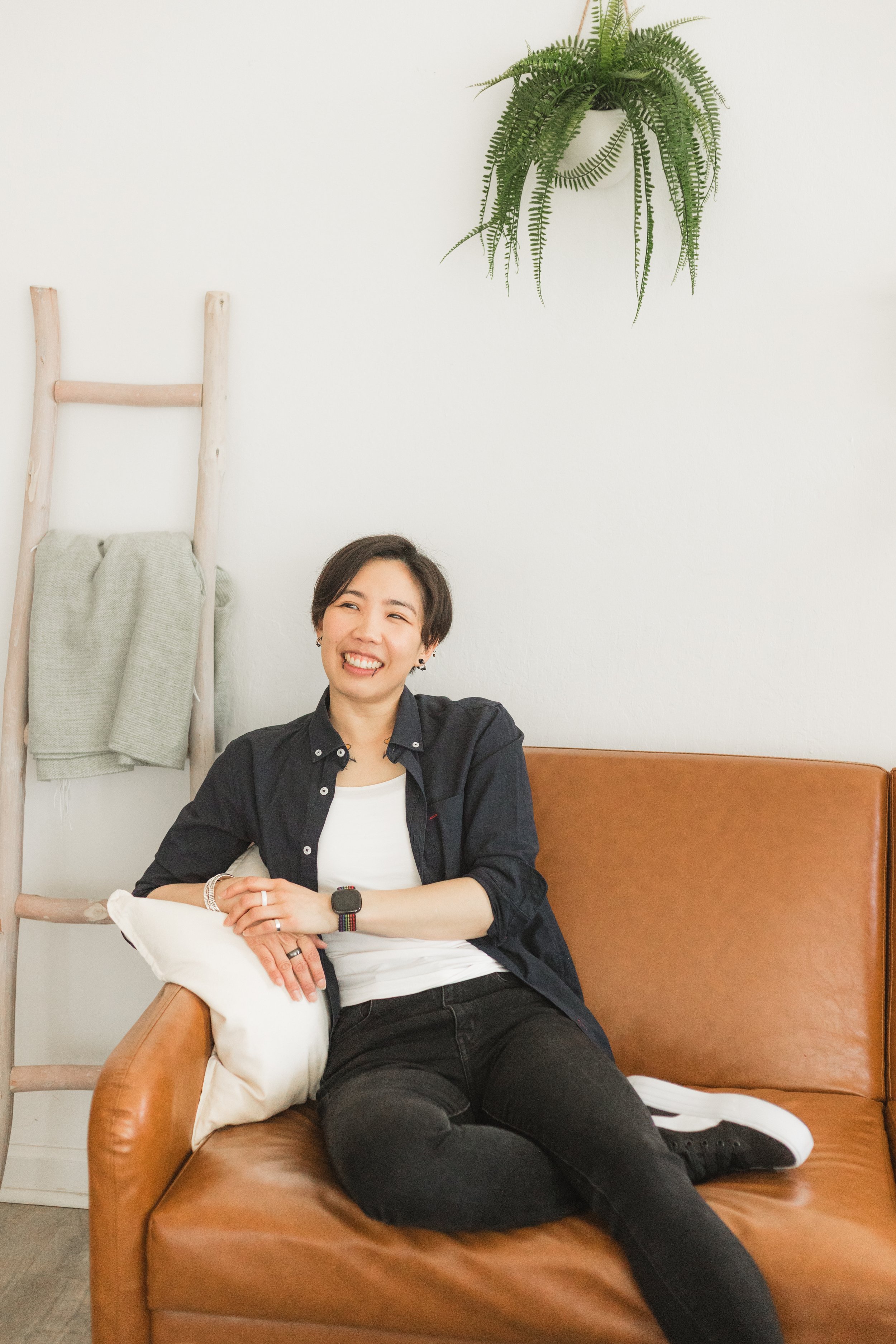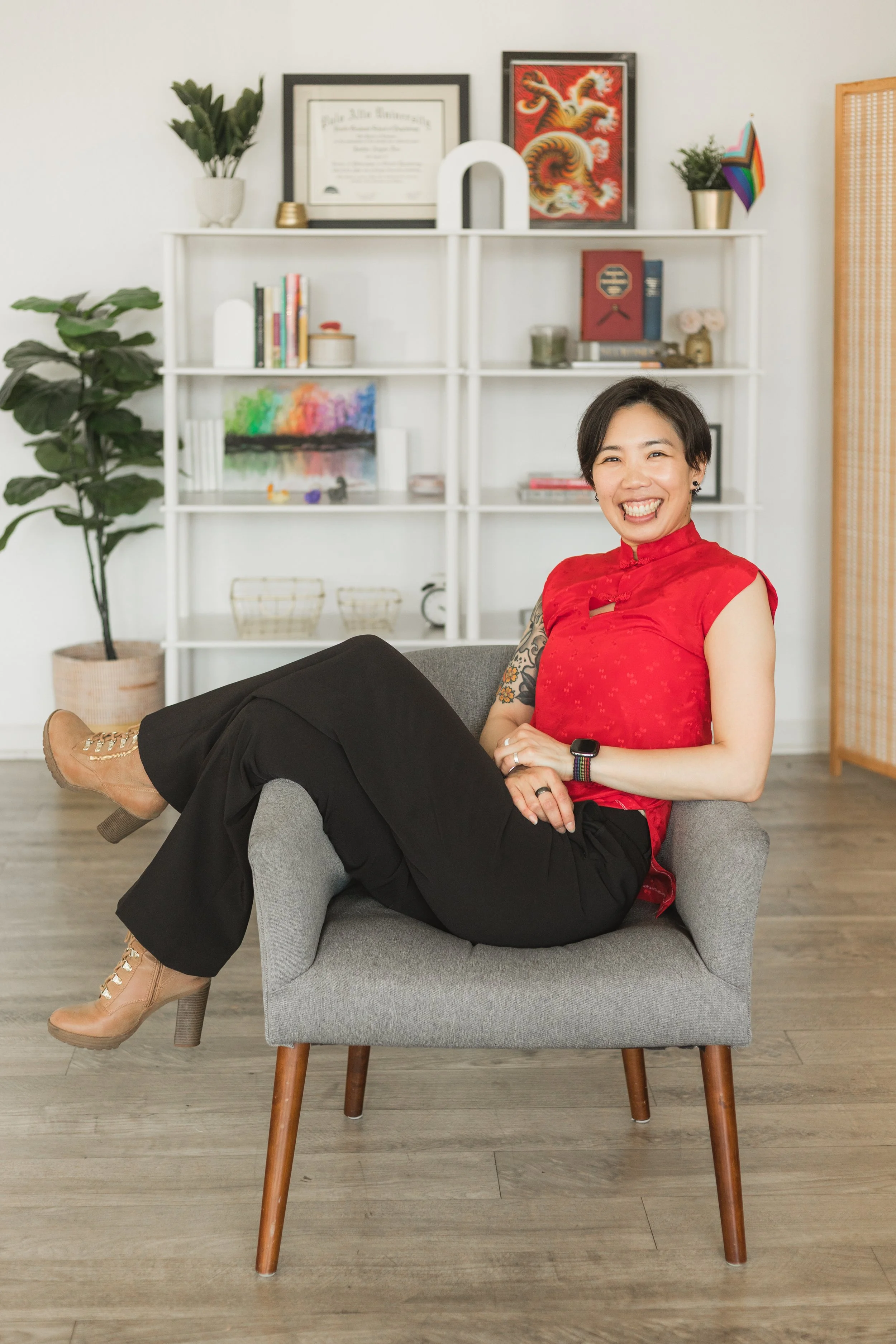
Hello, I’m Dr. Justine Fan (ze/zer/zers)
I am a queer, neurodivergent, Taiwanese American, licensed clinical psychologist working with adults across California.
My expertise is intersectionality, generational and family trauma, depression, anxiety, neurodivergence, chronic illness and LGBTQIA+ concerns.
My approach is warmth, genuineness, offering unconditional positive regard informed by feminist and narrative theory. I am neurodivergence and gender affirming. I strive to cultivate a safe space to promote self discovery and empowerment.
I received my doctoral degree from Palo Alto University. I completed my pre-doctoral internship at Miami University in Oxford, Ohio. My post doctoral residency training was at San Jose State University.
My Approach
Theoretical Orientation
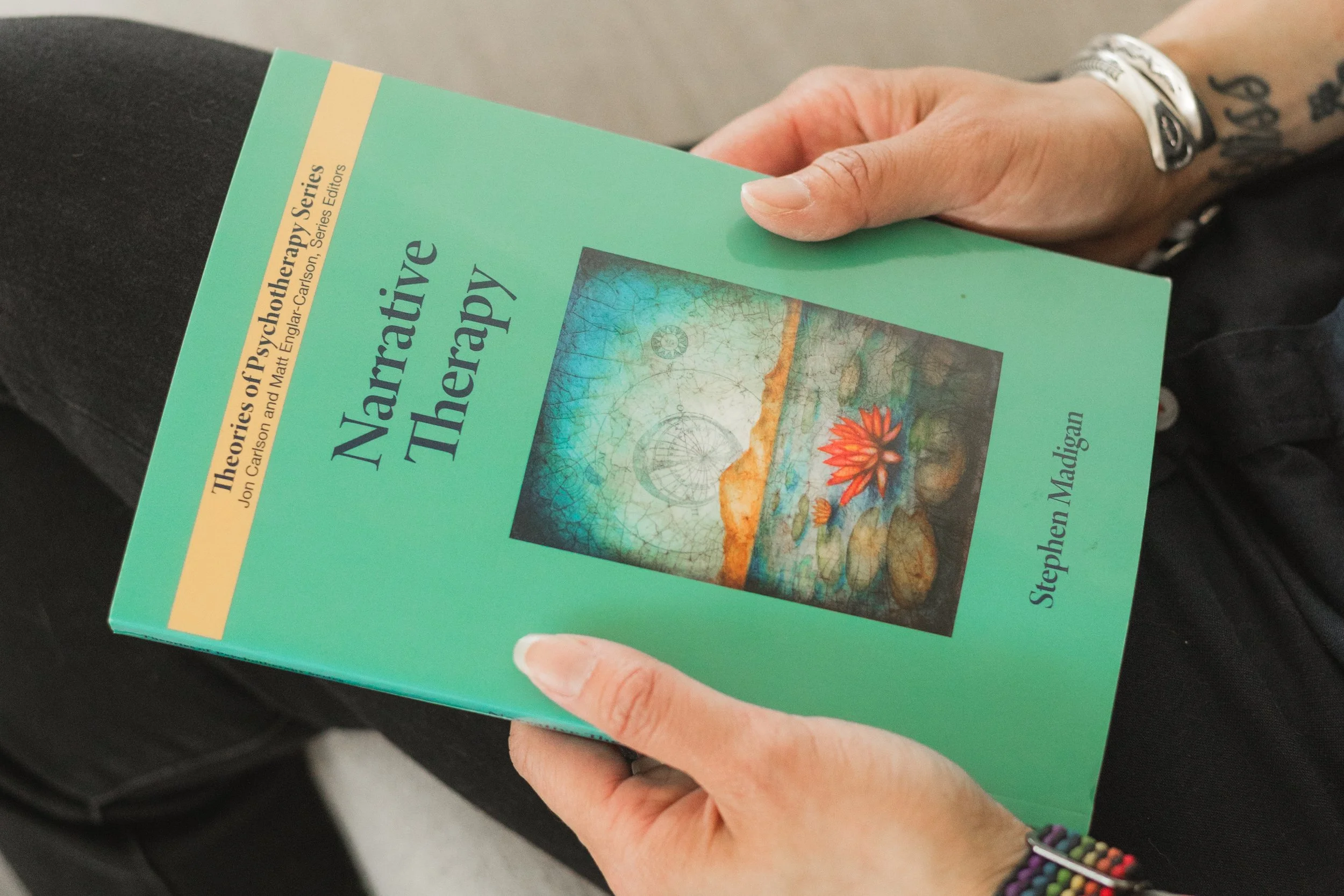
I work from a Narrative and Feminist Orientation using IFS and CBT techniques.
I believe everyone is writing their own story. In this “book” goes everything: your hopes, dreams, fears and worries, the good, the bad and everything in between.
Now, there are times it doesn’t feel like we are holding the pen and our story is being written for us.
I hope to use our work together to “restory“ your narrative, to help you take back control in the areas you can and practice acceptance in the areas we cannot change. This can take a while due to many systemic, cultural, and familial forces impacting our stories.
I practice therapy with a focus on transparency, empowerment and encouraging an equal relationship in our sessions.
Empowerment
Honor and elevate your own voice, while reclaiming personal agency and building self-reliance
Equal Relationship
Recognize and minimize inherent power difference in therapeutic relationship
Transparency
Openness and honesty about the therapeutic process while promoting active collaboration
Specialties:
Intersectionality:
It was a deeply isolating experience moving through the world feeling like I never fully belonged. Straddling two spaces, always in the in-between, juggling a lot of identities. My experiences finally made sense in graduate school when I learned about the term intersectionality.
The concept of intersectionality emphasizes that different dimensions of identity are not isolated from one another. They intertwine and overlap in intricate ways, resulting in distinct advantages or disadvantages. Our intersecting identities combine into unique experiences that influence the way we move through the world.
Chronic Illness:
Health is something people can take for granted. Having a healthy body is a privilege. Chronic illness can be more than just dealing with your physical symptoms. It has you grappling with a sense of grief, shame and guilt.
I’ve struggled with my own difficulties navigating the medical system and hope to help others find clarity in their own health journey. I approach these discussions with acceptance, self compassion and non-judgement.
Neurodivergence:
My ADHD evokes complicated feelings after being diagnosed in childhood but not being told of the diagnosis until I was older. I struggled with validating my experiences and developed a deeply negative internal self dialogue.
Therapy is helpful in learning to navigate a world that’s not built for us. Treatment is a space for you to explore your internal world with the end goal of acceptance and self understanding.
LGBTQIA:
I internalized a rigid idea of gender and sexuality in my youth and struggled to fit into any group or category. It was a very isolating experience that made me feel like I was a step behind everyone else. Confronting definitions of gender roles, identity and expression was the beginning of my self discovery.
I enjoy working with those who are on a similar path. Therapy is a safe space for exploration and introspection.
Second Generation Asian Americans:
The Asian American experience is so vast, there is no exact way to be an Asian American. Each comes with its own unique challenges, further complicated by our intersecting identities.
Growing up, I struggled to navigate conflicting cultural messages and develop a secure sense of self. Straddling two different sides while being on the fringes, made identifying as bi-cultural feel like a weight off of my shoulders.
I have been trained to do therapy in Mandarin Chinese by Chinese speaking supervisors.
Not ready to schedule a consultation?
Email me!